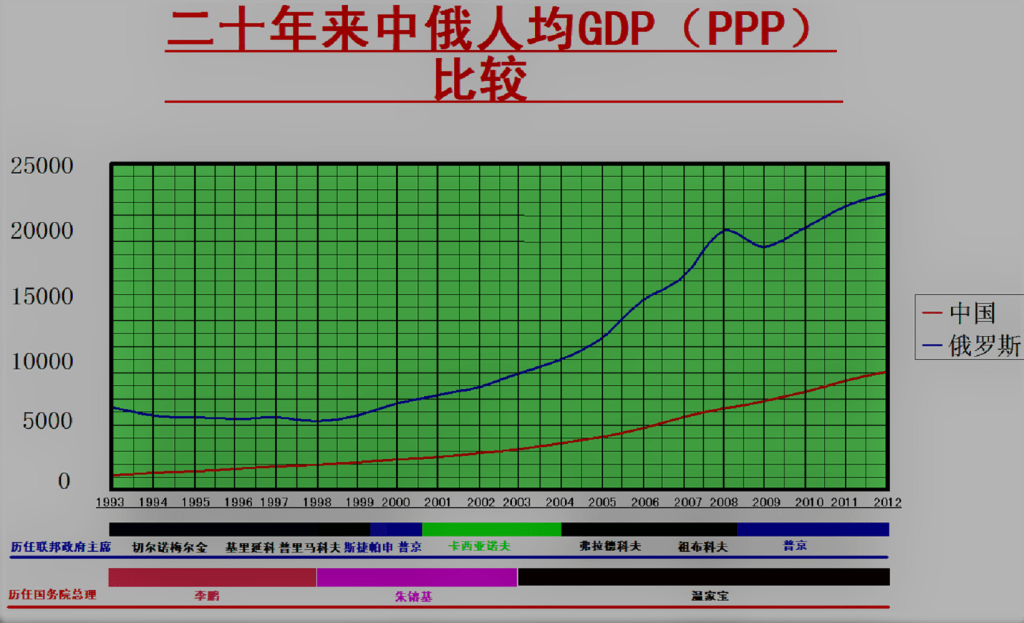
Gross Domestic Product (GDP) has become the bedrock of modern economics, serving as a vital measure of a nation’s economic health and progress. This comprehensive article explores the history of GDP, its calculation methodologies, its usefulness as an economic indicator, and the drawbacks associated with relying solely on GDP to gauge a country’s well-being.
In the late 17th century, William Petty, an English economist and physician, laid the groundwork for GDP by proposing a basic concept to assess the economic strength of nations. During the warfare between the Dutch and the English (1654-1676), Petty sought to challenge landlords’ demands for higher taxes to fund the conflict. He argued that taxes should be based on a nation’s productive capacity, taking into account factors such as land, labor, and capital. Although Petty’s ideas did not directly establish GDP as we know it today, they represented an early attempt to quantify a nation’s economic output.
Building upon Petty’s ideas, Charles Davenant, an English economist and government official, expanded the concept of national accounts in 1695. Davenant introduced the concept of “aggregates” and developed a method to estimate England’s national income by combining data on agricultural production, trade, and tax revenues. His work marked a significant step toward quantifying economic activity at the national level.
The modern concept of GDP originated as a response to the need for a standardized measure of a nation’s economic output. It emerged as a result of the economic turmoil caused by the Great Depression in the 1930s. Simon Kuznets, an American economist, is often credited with developing the first comprehensive national income accounts, which laid the groundwork for GDP calculation.
Calculation Methodologies
A.The Expenditure Approach
The most commonly used method to calculate GDP is the expenditure approach, which measures the total value of goods and services produced within a country’s borders over a specific period. This approach categorizes GDP into four components: consumption, investment, government spending, and net exports.
B.The Income Approach
The income approach to calculating GDP focuses on the total income generated by various factors of production. This approach accounts for wages, salaries, profits, rents, and other forms of income to arrive at an estimate of GDP.
C.The Production Approach
The production approach, also known as the value-added method, breaks down GDP by calculating the value added at each stage of production. By summing up these values across all industries, a nation’s GDP can be determined.
The four main components of GDP are as follows:
Consumption (C)
Consumption represents the expenditure by households on goods and services during a specific time period. It includes both durable goods (e.g., cars, appliances) and non-durable goods (e.g., food, clothing). Services such as healthcare, education, and transportation also fall under this category. Consumption expenditure is often the largest component of GDP and is influenced by factors like income levels, consumer confidence, and interest rates.
Investment (I)
Investment refers to the spending on capital goods, such as machinery, equipment, buildings, and infrastructure, that are used for production purposes. It includes both private investment (business investment in fixed assets and inventories) and public investment (government expenditure on infrastructure projects). Investment is crucial for economic growth as it contributes to productivity and expansion of the economy’s capacity.
Government Spending (G)
Government spending encompasses the expenditure by the government on goods and services. It includes spending on public administration, defense, education, healthcare, infrastructure development, and various public programs. Government spending is an important component of GDP, as it represents the economic activities directly undertaken by the government.
Net Exports (NX)
Net exports capture the difference between a country’s exports and imports. Exports refer to the value of goods and services produced domestically and sold to other countries, while imports represent the value of goods and services purchased from abroad. Net exports can be positive (surplus) or negative (deficit). A positive net exports value implies that a country is exporting more than it is importing, contributing positively to GDP. Conversely, a negative net exports value implies that a country is importing more than it is exporting, exerting a downward pressure on GDP.
Usefulness of GDP
A.Economic Indicator
GDP serves as a primary indicator of a nation’s economic performance, providing valuable insights into the overall size and growth rate of an economy. It allows for comparisons between countries and offers a measure of standard of living within a specific region.
B.Policy Planning and Evaluation
GDP plays a vital role in shaping economic policies, including fiscal and monetary measures. Governments use GDP data to assess the impact of policy interventions and evaluate the effectiveness of various economic strategies.
C.International Comparisons
GDP enables comparisons between nations, aiding in international trade negotiations and policy coordination. It allows policymakers to identify areas of comparative advantage and make informed decisions regarding resource allocation and trade patterns.
D. Investment Decisions
Investors often rely on GDP data to make informed investment decisions. GDP growth rates can influence stock markets, capital flows, and foreign direct investment, providing indicators of market potential and economic stability.
The limits of GDP
A.Neglect of Non-Market Activities
GDP calculations primarily focus on market-based economic activities, leading to the exclusion of non-market activities such as household production, volunteer work, and the informal sector. This exclusion can result in an incomplete representation of a nation’s economic well-being.
B.Quality of Life Indicators
GDP fails to capture various factors that contribute to overall well-being and quality of life, such as income inequality, environmental degradation, health outcomes, and educational attainment. Relying solely on GDP as a measure of progress can mask social and environmental costs.
C.Inflation and Price Level Changes
GDP measures nominal output, making it vulnerable to inflationary effects. Changes in price levels can distort GDP figures and create challenges when comparing GDP across different time periods or regions. Adjustments for inflation, such as real GDP, are employed to address this issue to some extent.
D.Distributional Concerns
GDP provides an aggregate measure of economic output but does not reflect how that output is distributed among different segments of the population. Rising GDP does not guarantee equitable distribution of wealth and can exacerbate income disparities, leading to social and political challenges.
While GDP has been a fundamental tool in measuring economic activity and guiding policy decisions for decades, its limitations and drawbacks must be acknowledged. Complementary indicators, such as the Human Development Index (HDI) and the Genuine Progress Indicator (GPI), have emerged to provide a more comprehensive understanding of economic well-being. It is crucial to recognize that GDP should be viewed as a single lens through which to evaluate an economy, and policymakers must consider a broader set of indicators to ensure sustainable development.

 EAST AND WEST
Leave a comment