The Arab civilization, with its rich history and contributions to various fields of knowledge, has witnessed both periods of remarkable prosperity and enduring decline. For centuries, Arab scholars, artists, and thinkers played pivotal roles in shaping the global intellectual landscape, from advancements in mathematics and astronomy to poetry and architecture. However, the Arab world, once a beacon of enlightenment, has experienced a notable decline in recent centuries, giving rise to a complex interplay of social, political, economic, and cultural factors.
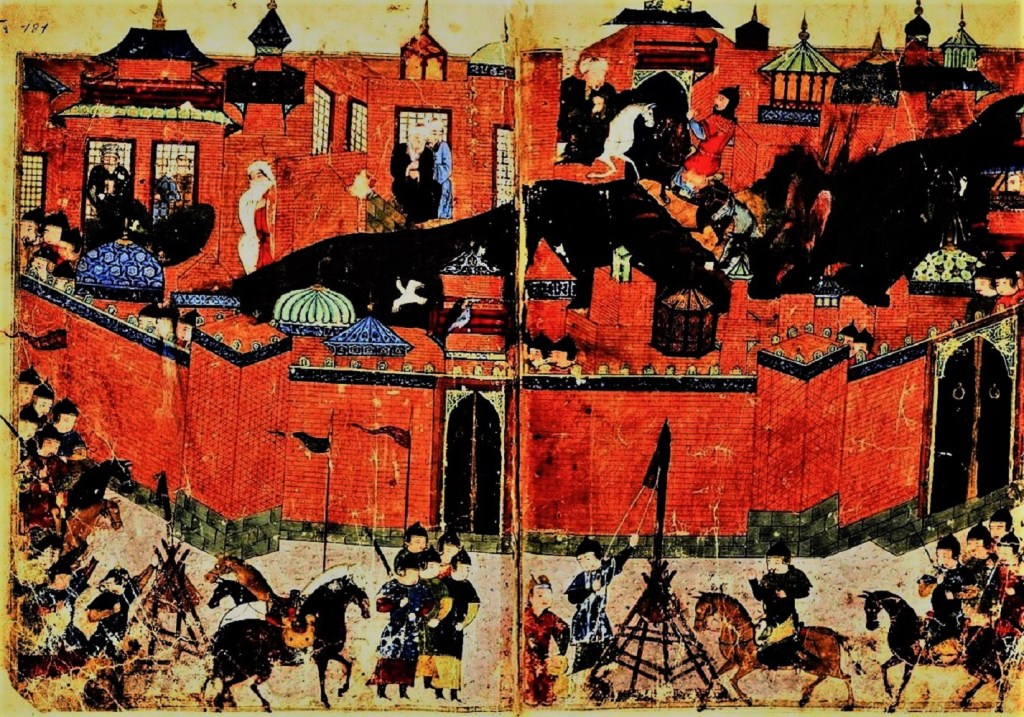
To understand the decline of Arab civilization, it is essential to delve into the historical factors that have shaped the region. The Arab world experienced a golden age during the Islamic Golden Age (8th to 13th centuries) when Arab scholars and intellectuals made groundbreaking advancements in fields such as mathematics, medicine, philosophy, and architecture. However, the decline began with the Mongol invasions, the Crusades, and the fall of the Abbasid Caliphate, which resulted in political instability, territorial losses, and the destruction of libraries and centres of knowledge.
The era of European colonialism greatly impacted the Arab world and left lasting effects that continue to reverberate today. Arab lands were subjected to foreign domination, leading to the imposition of foreign governance, the erosion of indigenous institutions, and the exploitation of resources. The Sykes-Picot Agreement of 1916, which divided Arab territories between European powers, further exacerbated divisions and sowed the seeds for future conflicts. Colonialism disrupted social structures, shattered economies, and suppressed indigenous languages and cultures, creating a fragmented Arab world that struggled to regain its footing after gaining independence.
Political instability has been a recurrent theme in the Arab world, hindering progress and impeding the development of a cohesive civilization. Following the era of colonialism, many Arab nations faced internal struggles, including coups, revolutions, and military dictatorships. The Arab-Israeli conflict and the Palestinian issue further fuelled regional tensions, diverting attention and resources away from internal development. The rise of authoritarian regimes, often supported by external powers for their strategic interests, stifled political freedoms, curtailed innovation, and hindered social progress, leading to widespread discontent among the population.
Economic challenges also have played a significant role in the decline of Arab civilization. Despite possessing vast oil reserves, many Arab nations have struggled to diversify their economies and reduce their heavy reliance on oil revenues. The ’resource curse’ phenomenon, where abundant natural resources hinder economic development and foster corruption, has plagued several Arab countries. Limited job opportunities, unequal wealth distribution, and high levels of youth unemployment have fuelled social discontent and exacerbated political instability, hindering the region’s progress.
Arab civilization’s decline is also closely linked to the education and knowledge gap within the region. Despite historical contributions to academia, the Arab world faces challenges in providing quality education and fostering a culture of critical thinking and innovation. Educational systems often emphasize rote learning, leaving little room for creativity and independent thought. This has hampered the development of a thriving knowledge-based economy and hindered the region’s ability to keep pace with global advancements.
Social and cultural factors also contribute to the decline of Arab civilization. Gender inequality, limited women’s rights, and patriarchal structures have hindered the full participation of women in various spheres of society. Societal conservatism, religious extremism, and sectarian tensions have impeded social progress and cultural openness. Such factors limit the ability of individuals to freely express themselves, exchange ideas, and engage in open dialogue, thereby stifling intellectual growth and cultural diversity.
The Arab world has been marred by numerous regional conflicts and geopolitical dynamics that have further exacerbated its decline. Internal conflicts, such as the Lebanese Civil War, the Iraq War, and the ongoing Syrian Civil War, have caused immense human suffering, displacement, and the destruction of infrastructure. Proxy wars and external interventions have also fuelled divisions and hindered the region’s ability to focus on development and progress.
While the Arab civilization was historically renowned for its scientific and technological advancements, there has been a notable decline in these areas in recent centuries. The lack of investment in research and development, limited collaboration between academia and industry, and the brain drain phenomenon, where talented individuals seek opportunities abroad, have hindered scientific and technological innovation in the region. This has resulted in a significant technological gap between the Arab world and other regions, impacting economic growth and societal progress.
The decline of Arab civilization is a complex and multifaceted phenomenon that cannot be attributed to a single factor. Historical contexts, such as colonialism and the Mongol invasions, have had lasting effects, while political instability, authoritarianism, economic challenges, education gaps, and social factors have all contributed to the decline.

 EAST AND WEST
Leave a comment