
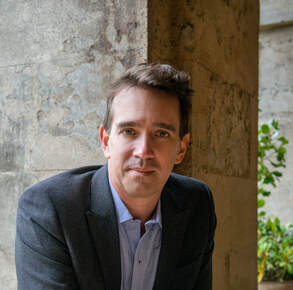
Will Iran emerge as the new dominant power in the Middle East, strengthened, in spite of having been decapitated?
Peter Frankopan: Well, I am wary both of the concept of ‘decapitation’ but also of the supposed nature of what has happened in the last six weeks. While it has been well-publicised that a large number of senior officials have been killed in Iran, it is worth paying careful attention to precisely who has been targeted – and who has not. Likewise, it is not helpful to talk about ‘decapitation’ when all new people have been promoted to take new positions. When you are decapitated, you cannot grow or get a new head. In the case of Iran, there has been no problem in the recruitment process, which means we should be thinking in terms of regeneration, rather than something more final.
All that being said, it is clear that Iran has played its hand of cards well. I don’t mean that as a means of being sympathetic or critical, but rather as a statement of fact. The regime in Tehran has been effective in ensuring it has leverage and has not simply collapsed. It has done so by widening the conflict, by making sure its neighbours have felt pain, and by militarising the Strait of Hormuz it has extended that further to global economies – particularly those in Asia and Africa. That means that Iran still holds some cards, despite Trump saying otherwise. But that does not mean anything in terms of what emerges from this crisis. There are a few ways this could go, and it is premature for now to try to guess what comes next. You need a prophet for that, not a historian.
Does a powerful Iran necessarily have to be a threat for the Middle East, Israel and even Europe? Is Iran bound to remain hostile, a perennial adversary of the West?
Peter Frankopan: This of course depends on what kind of regime emerges if and when there is a settlement. And much will depend, in turn, on the personalities of the individuals in question. From the perspective of the outside world, Iran has played a dangerous set of games in the Middle East since 1979, building up proxies, sowing unrest, using violence and undermining stability. Internally too, Iran has used repression against its own citizens, both against individuals and sometimes indiscriminately too. So the question is why it has done so. There are many explanations. One is that Iran has seen itself as a revolutionary state since Khomeini took power, and, as such, the greatest fear is the threat of a counter-revolution; another is that fear is a valuable political tool that allows for a constant sense of fear; another is the prison of history where Iranians – and not just since 1979 – feel that outsiders are trying to undermine, exploit and manipulate in order to benefit from the country’s resources. All these have important elements of truth in them. The attacks of last June and then those that began on 28 February reinforce all these narratives. So yes; one would expect that perennial sense of rivalry to endure. There are ways out of this; but I am not confident that the US and/or Israel, the west, or Iran’s neighbours will help find them – nor that the regime in Tehran will want them.
Many in Iran were unhappy with the Islamic regime. Yet when Iran was attacked, there were no mass uprisings to overthrow the Iranian government, like Israel and Trump had auspicated. Why?
Peter Frankopan: It helps that the apparatus of power is formidable; so too does the track record – again not just since 1979 but under the last Shah too. Protesting in Iran requires more bravery than it does on the streets of Oxford, and Iranians know that. It helps too that the internet and communications have been severely curtailed, which helps manage bad news being spread, allows the government to tell its side of the story and, most importantly of all, to make co-ordination of dissent difficult. Even in these circumstances, though, some are surprised – as your question suggests – by the absence of uprisings. There is an obvious answer: people don’t want their country to be bombed into submission from outside. People want to choose their own leaders, not be forced into that by Donald Trump, Benjamin Netanyahu or anyone else. I don’t think that is hard to understand.
Pakistan helped mediate between Iran and the United States, thereby increasing its diplomatic capital. What does this war mean for Pakistan and other countries in the region, including Central Asian countries?
Peter Frankopan: It’s good question, and one with potentially very long answers. There are overlapping issues as far as Pakistan is concerned. First, it is a neighbour to Iran, so is closely affected by what is happening in the Gulf and in Iran. Second, it has not been drawn in directly, as many of Iran’s other direct and regional neighbours have been – which provides an arm’s length perspective, which is clearly useful. Third, it is one of the countries that is most in need of a settlement: Pakistan has some renewable energy, but it is heavily dependent on energy from elsewhere, especially the Gulf. it imports 99% of its LNG from the Gulf, as well as 90%+ of its crude oil. All of this comes via tanker, rather than pipeline. So the effective closure of Hormuz presents a very serious problem indeed. Fourth, it has close ties with China; that matters because Beijing is clearly concerned about the effects of the war – especially on markets that matter for China. For all these reasons, plus Pakistan’s geopolitical clout, makes Islamabad an obvious choice to host talks. Whether the government there can bring a settlement between the parties is another story. But we should all hope that it will. Central Asia is a different story; the crisis in the Gulf brings opportunities and challenges for all five former Soviet states, and also for Afghanistan. But these are of a different magnitude to Pakistan and elsewhere, at least for now.
Is this war another episode in the great power shift from the West to the East? Is this process inevitable? What will this mean for the West?
Peter Frankopan: Let’s put it this way. What matters more: sorting out Hormuz, or elections this year in Sweden and Denmark, or the choice of a new president in Portugal or Bulgaria? What matters more, the energy situation that has already closed factories across India and persuaded the government of the Philippines – a country with a population of 115m people to declare a national emergency? The connections that link regions and peoples across Asia have always mattered; the west ‘rose’ by working out how to benefit from and control these. The Dutch, Portuguese, British and others built empires by doing this – not only in Asia, but primarily, as this was where wealth, scholarship and manufacturing were strongest. That is the power of the concept of the Silk Roads – webs of places, cultures, ideas and places that linked the Pacific with Central Asia, the Indian Ocean, the Gulf, Africa and the Mediterranean. Power shifts are reflections of ambition and capabilities; for me, these are not inevitable processes – just a fact of life. And so yes. In a changing world, where power lies matters. And that seems to be shifting rapidly today.

 EAST AND WEST
Leave a comment