Philosophy
-
Sartre and drugs
Jean-Paul Sartre, a prominent figure in existentialist philosophy and literature, is best known for his contributions to existentialist thought and his iconic works such as “Being and Nothingness” and “Nausea.” His philosophical explorations revolve around themes of freedom, authenticity, and the inherent anguish of human existence. However, Sartre’s personal life was not devoid of controversy… Continue reading
-
The Kyoto School
The Kyoto School a distinguished intellectual movement that emerged in Japan during the 20th century, has significantly shaped the landscape of Eastern and Western philosophical discourse. Rooted in Eastern traditions, yet heavily influenced by Western philosophy, this unique school of thought offers a fascinating blend of ideas, presenting a profound interpretation of human existence, ethics,… Continue reading
-
German philosophy in Russia
In the 19th century, Russia experienced a profound cultural and intellectual transformation. The influence of German philosophy and writers played a crucial role in shaping the intellectual landscape of Russia during this period. German thinkers such as Immanuel Kant, Johann Gottlieb Fichte, Friedrich Wilhelm Schelling, and Georg Wilhelm Friedrich Hegel, along with German literary giants… Continue reading
-
Logocentrism
Logocentrism, a concept rooted in the field of philosophy and literary theory, challenges the long-standing assumption that language and writing are the primary sources of knowledge and meaning. Coined by the French philosopher Jacques Derrida, logocentrism refers to a Western philosophical tradition that privileges speech and writing over other forms of communication and knowledge production.… Continue reading
-
Is Philosophy Useless? Yes and no
Philosophy, often regarded as the love of wisdom, has long been a subject of debate regarding its practicality and relevance. Detractors argue that philosophy is a useless pursuit, claiming that those who study it struggle to find meaningful employment. However, this perspective fails to acknowledge the profound impact philosophy has had on various aspects of… Continue reading
-
Romanticism and nationalism
Johann Gottfried Herder, a prominent German philosopher and poet, played a pivotal role in shaping the development of German Romanticism and its subsequent impact on nationalism and chauvinism. Born in Riga, Latvia, in 1744, Herder’s ideas and writings emphasized the uniqueness and value of different cultures and nations. While he celebrated cultural diversity and advocated… Continue reading
-
Arabs and ancient Greeks
The Arab civilization played a pivotal role in the preservation and transmission of ancient Greek culture. In the centuries following the fall of the Roman Empire, the Arab world became a centre of intellectual and scientific advancement. Arab scholars eagerly embraced the wealth of knowledge found in ancient Greek texts, translating and preserving them for… Continue reading
-
Plato’s Academy

In the annals of human civilization, few institutions have left an indelible mark on the pursuit of knowledge and the development of philosophical thought quite like Plato’s Academy. Established by Plato in 387 BCE, this iconic educational institution in Athens became the epicentre of intellectual discourse, nurturing some of the greatest minds of the ancient… Continue reading
-
Claude Lévi-Strauss and structuralism

Structuralism is a theory that has its roots in the structural linguistics of Ferdinand de Saussure. The idea is that the structure of a system or object is more important than the individual components that make it up. This means that it is not the individual parts of a society, for example, that are important,… Continue reading
-
Heidegger, Sartre, and Existentialism
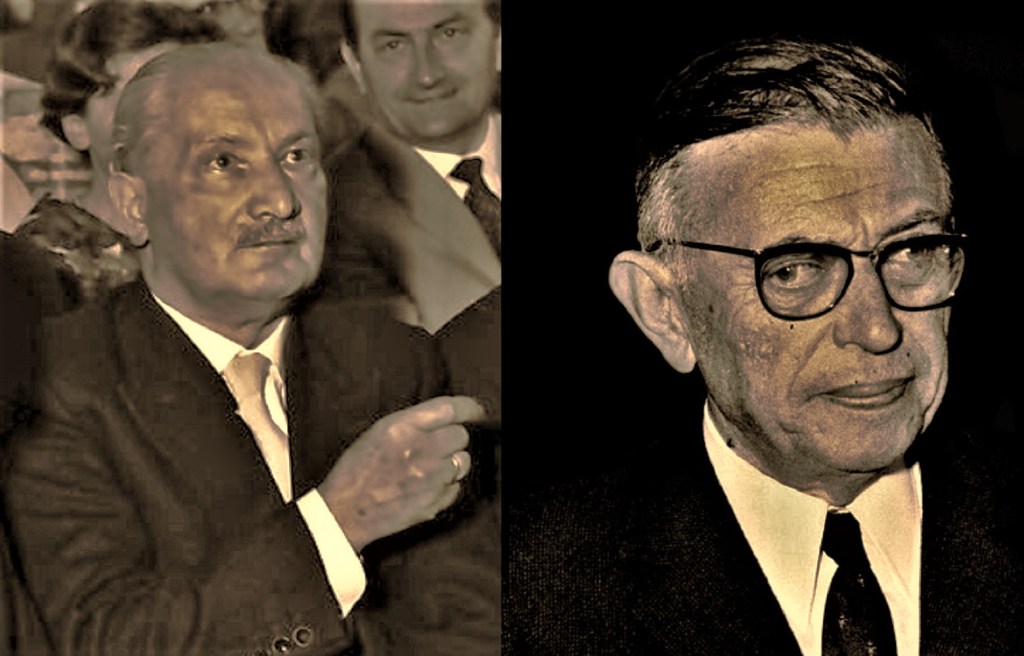
Existentialism, a philosophical movement that emerged in the 20th century, brought forth new perspectives on human existence, freedom, and the search for meaning. Two prominent figures within this movement were Martin Heidegger and Jean-Paul Sartre. While their contributions to existentialism were significant, their political affiliations during tumultuous times sparked controversy and debate. Heidegger’s controversial association… Continue reading
-
Implications of Recent Discoveries in Physics for Sociology

With advancements in physics expanding our understanding of the fundamental laws governing the universe, it is crucial to examine how these discoveries intersect with social systems, human behaviour, and societal structures. Through an interdisciplinary lens, we look at the potential influence of concepts such as quantum mechanics, relativity, and cosmology on sociological theories and practices.… Continue reading
-
Nietzsche, Europa und der Orient
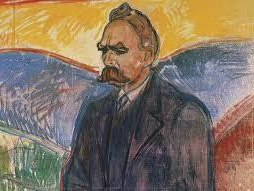
Nietzsche betrachtete Europa als einen Ort des Umbruchs und der Transformation. Er war der Meinung, dass die traditionellen religiösen, philosophischen und moralischen Wertvorstellungen, die Europa geprägt hatten, im Niedergang begriffen seien. Nietzsche kritisierte insbesondere das Christentum und dessen Einfluss auf die europäische Kultur, das er als eine Religion der Schwäche und der Unterdrückung ansah. Er… Continue reading
-
What is French Theory?

French Theory refers to a body of critical and philosophical thought that emerged primarily in France during the latter half of the 20th century. It encompasses a range of thinkers and intellectual movements, including poststructuralism, deconstruction, psychoanalysis, feminism, and Marxism. These schools of thought collectively challenged traditional modes of thinking and sought to dismantle established… Continue reading
-
Nietzsche and Europe
Friedrich Nietzsche lived during a time of significant societal and cultural changes in Europe. The 19th century was marked by the rise of nationalism, industrialization, urbanization, and the spread of Enlightenment ideals. Nietzsche, however, was critical of the direction in which European society was heading. He saw modernity as a period of nihilism, where traditional… Continue reading
-
Marijuana and philosophy
Marijuana, also known as cannabis, has been used for centuries for various purposes, including medicinal and recreational use. It has also been used as a tool for exploring altered states of consciousness, which has led to some philosophical interest in its effects on the mind, perception, and the self. Philosophers have debated the implications of… Continue reading
-
Schopenhauer and Indian philosophy

Arthur Schopenhauer, the 19th-century German philosopher, is known for his pessimistic philosophy of life and his keen interest in Eastern philosophy, particularly Indian philosophy. Schopenhauer’s philosophy is heavily influenced by the Indian philosophy of Vedanta and Buddhism, and his works contain many references to these traditions. In this article, we’ll explore Schopenhauer’s fascination with Indian… Continue reading
-
Heidegger and ethics
Martin Heidegger is considered one of the most influential philosophers of the 20th century. Born in Germany in 1889, Heidegger’s works have been widely studied and discussed for decades. One of his most notable contributions to philosophy is his concept of ethics, which emphasizes the importance of authenticity and individual responsibility. In Heidegger’s view, ethics… Continue reading
-
Why did Schopenhauer hate Hegel?
Arthur Schopenhauer and Georg Wilhelm Friedrich Hegel were two of the most influential philosophers of the 19th century. While both were German, their philosophies were very different, and Schopenhauer was a harsh critic of Hegel’s work. One of the main reasons Schopenhauer disliked Hegel’s philosophy was that he felt it was overly complex and inaccessible.… Continue reading
-
Baudrillard and hyperreality
Jean Baudrillard was a French philosopher and sociologist known for his concept of hyperreality, which he explored in depth in his book “Simulacra and Simulation.” In this work, Baudrillard argues that in contemporary society, reality has been replaced by simulations, and that these simulations have become more real than the reality they imitate. According to… Continue reading
-
Russian philosophers
Russian philosophers have made significant contributions to the field of philosophy over the years. Some of the most prominent and influential thinkers in the world have come from Russia. One of the most significant figures in Russian philosophy was Pyotr Chaadaev. Chaadaev is known for his essay “Philosophical Letters,” in which he critiques the Russian… Continue reading
 EAST AND WEST