
One of the fundamental misconceptions of the Western Balkan countries – the product of decades of propaganda – is that the European Union today is the legal and political bearer of European culture (or, in our parlance: the motherland of Europeanism), and that as such it is in some privileged relationship with what our politicians are accustomed to calling ‘civilisational values’.
Let us put aside the fact that the very concept of ‘civilisational values’ is an Orientalist construct, the purpose of which is to justify colonial dependencies by invoking the need to civilise the native population. Ask the people who live in the former European colonies in Africa or Southeast Asia what they think of the “civilisational values” of today’s EU member states – or, if Asia is too far away, ask your own ancestors what they thought of the Austro-Hungarians and their mission civilisatrice. Our tendency to uncritically adopt a vocabulary that reproduces colonial power relations – that is a separate matter.
But anyway, where does the idea that the EU is some kind of exclusive guardian of European culture even come from? The situation is quite different. For decades, EU institutions have sought to strip “European-ness” as an identity marker of any meaningful connection to European culture – to the achievements of European literature, philosophy, art, the mythology and spirituality from which the European civilisational code is woven, insofar as it can be spoken of at all. Instead, over the past few decades, EU institutions have worked diligently to tie the meaning of Europeanism entirely to the concept of “European values” – or rather, to a set of ideological postulates which European liberals, in a specific historical conjuncture, declared to be European values.
And why? Well, among other things, because a Europeanism whose content is polysemous and rich, whose foundations simply cannot be defined in the register of legal-political norms, necessarily thwarts the ruling class’s efforts to turn it into a political doctrine and, in the next step, format it according to its own day-to-day political needs. Meanwhile, this one-dimensional, culturally and historically emptied Europeanism is incomparably easier to privatise from a position of power. If European identity is reduced to “European values”, and those European values to a list of “principles” which the European Commission will translate into a set of political directives, then ultimately it is the European Commission that decides who is a European and who is an anti-European.
The Brussels political elite, therefore, are not institutional affirmers of European culture, but active participants in the process of its marginalisation. And this process is plain to see. Anyone who has been in the countries of the European Union in recent years could have noticed that in the perception of the average German, Frenchman or Italian, the meaning of European identity is measured less and less by their attitude towards Dante, Goethe and Molière, Wagner and Verdi, Rembrandt and Picasso, Proust and Thomas Mann, Fellini, Fassbinder and Godard, and more and more by their stance on the war in Ukraine.
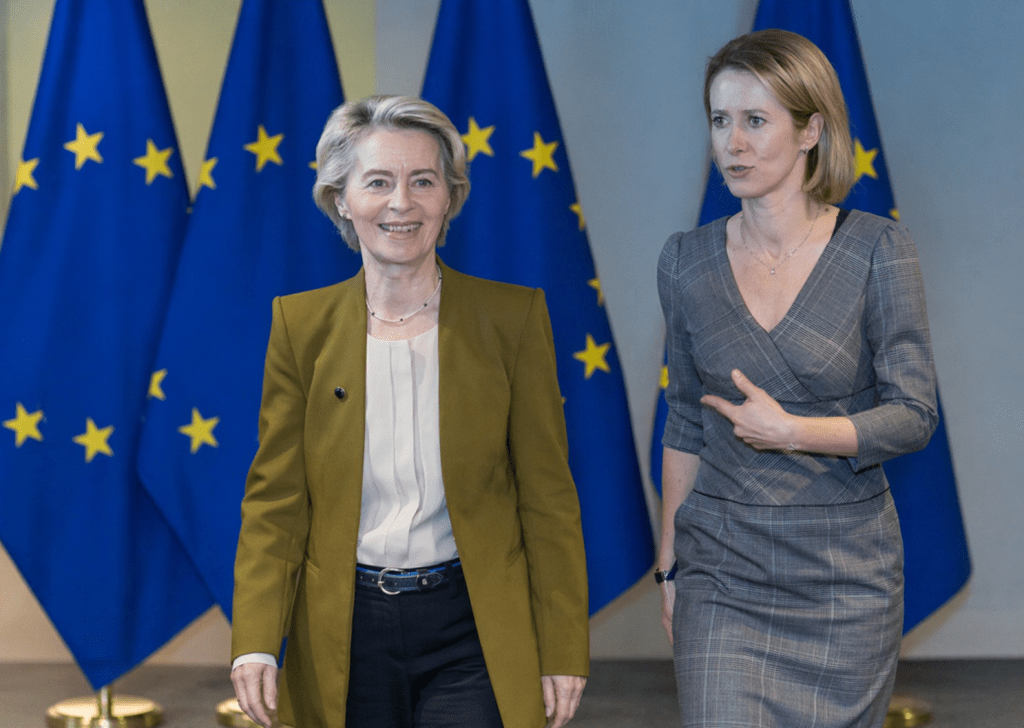
This banal politicisation of Europeanism represents a great tragedy for Europe and Europeans. But it is also a clear political strategy. It is for this very reason that the leaders of the European Commission do not see the autonomy of the European cultural space as a value to be protected, but as a threat that must be sanctioned. Just as the Democratic Party of Socialists of Montenegro resented any Montenegrin identity that did not fit their party ideology, so too do Kaja Kallas and Ursula von der Leyen resent a Europeanism that refuses to submit to their geopolitical agenda. And we, who did not allow the DPS to define Montenegrinism for us, it seems we will allow Brussels to define Europeanism for us.
Fedja Pavlovic
Fedja Pavlovic is a Research Associate in Political Theory at the University of Montenegro’s Institute for Advanced Studies and has a PhD Political Science from Ludwig-Maximilians-Universität München. This article was originally published by the author on X.


Leave a Reply